
This is an independent educational reference. It is not a clinic, it does not treat anyone, and it is not affiliated with any medical practice, practitioner or organisation. Nothing here is medical advice, and nothing here can substitute for an examination by a qualified clinician who can actually look at your foot.
Why the foot is complicated
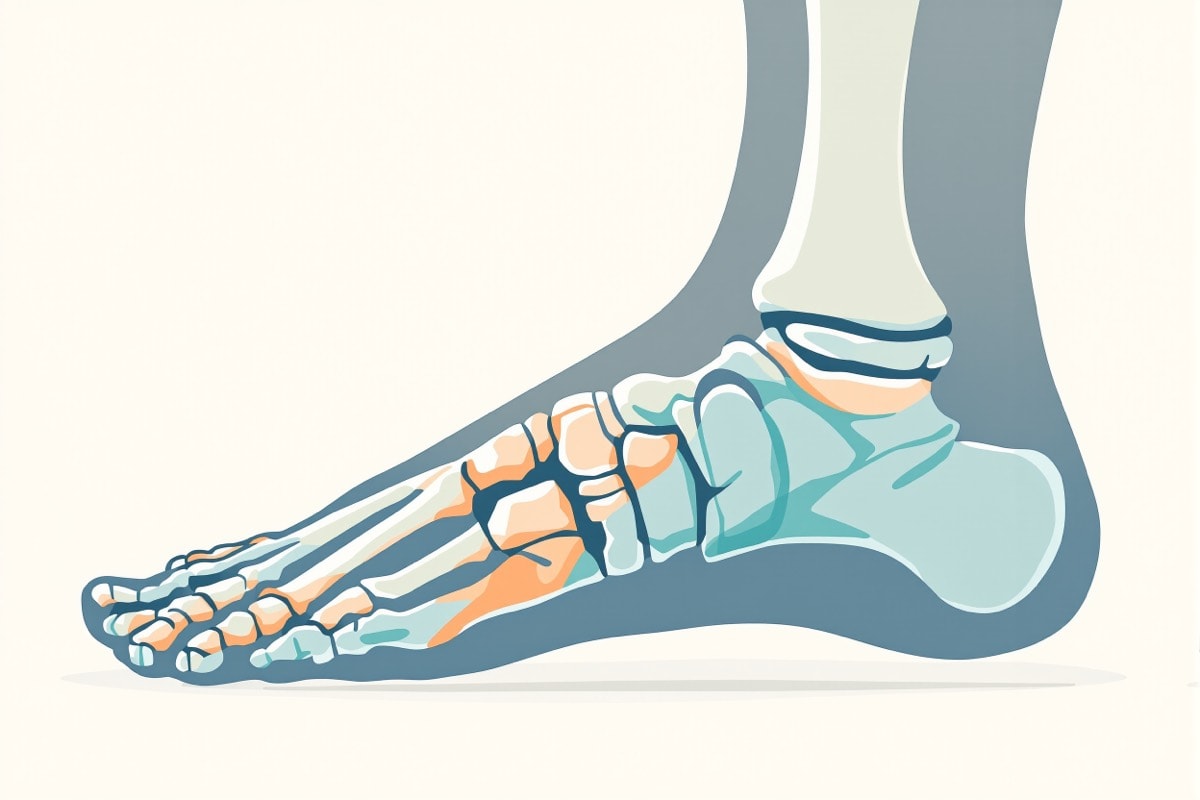
A single foot contains twenty-six bones — the two feet together account for roughly a quarter of all the bones in the body. Those bones meet at thirty-three joints, and the whole structure is held together and moved by more than a hundred ligaments and a set of muscles and tendons, some of which originate up in the lower leg rather than in the foot itself. It is a suspension system, a lever, a shock absorber and a sensory organ, and it does all four jobs at once.
That complexity is why foot pain is so often referred pain, and why the place that hurts is not reliably the place where the problem lives. Pain under the heel can come from the plantar fascia, from the fat pad, from a nerve, or from a stress fracture. Numbness in the toes can start at the toes, at the ankle, or in the lower back. Working out which is which is a clinical job, not a reading job — but understanding the possibilities makes the conversation with a clinician far more useful.
What this reference covers
The material here is organised the way people actually search for it: by the thing that is bothering them.
- Heel pain, plantar fasciitis and heel spurs — far and away the most common reason adults seek foot care.
- Bunions, hammertoes and forefoot deformity — slow structural changes at the toes.
- Ingrown toenails and nail disorders — including thickened, discoloured and fungal nails.
- Morton's neuroma and nerve pain — burning, tingling and the sensation of standing on a pebble.
- Flatfoot, arch height and foot posture — what a low arch does and does not mean.
- The diabetic foot — neuropathy, circulation and the daily check that prevents most serious problems.
Alongside the conditions there are longer pieces on foot orthoses, on wound care and ulceration, and on laser treatment for fungal nails — the last of which is included precisely because it is so often described in overheated terms and deserves a sober account of what the evidence actually supports.
If you would rather start from the treatment side than the symptom side, what foot and ankle care actually covers maps the whole territory in one place — mechanical and structural problems, skin and nails, nerve and circulation, diabetes-related care, sports and overuse injury, and where surgery sits in the sequence. It also sets out, for tendon and soft-tissue problems in particular, which approaches rest on solid evidence and which are still investigational, because that is the distinction people most often arrive here unable to make.
The single most useful page here
If you read only one thing, read when a foot problem needs professional care. Most foot complaints are self-limiting nuisances. A small number are not, and the difference is usually recognisable: sudden inability to bear weight, a wound that is not closing, spreading redness or warmth, a change in the colour or temperature of the foot, new numbness, or any foot problem at all in someone with diabetes or reduced circulation. Those are not wait-and-see situations.
How the information here is sourced
Everything factual on this site is written against publicly available material from recognised bodies — among them the MedlinePlus foot injuries and disorders collection maintained by the U.S. National Library of Medicine, the patient information published by the American Podiatric Medical Association, and the orthopaedic condition summaries at OrthoInfo, the patient-education service of the American Academy of Orthopaedic Surgeons. Where a figure or a claim appears here, the source is linked on the page it appears on so you can go and read the original.
Deliberately absent: product recommendations, device endorsements, treatment bookings and anything that would make this site a commercial surface. There is nothing to buy here and nothing being sold. Where a named organisation or service does appear — which happens occasionally, because explaining how access to something actually works sometimes requires naming who provides it — it is described, not recommended, and no external link on this site is an endorsement. That is a design decision, not an oversight: health information changes character the moment it has something to gain.
A note on foot health across a lifetime
Two patterns run through almost every page on this site. The first is that footwear matters more than most people expect. A great many acquired foot problems trace back to shoes that were too short, too narrow across the toe box, or too high at the heel, worn over decades. Only a small proportion of foot problems are present from birth; most are accumulated.
The second is that the feet are an early-warning system for the rest of the body. Circulatory disease, inflammatory arthritis, and above all diabetes frequently announce themselves in the feet before they announce themselves anywhere else — through changed sensation, slow-healing skin, altered nail growth or unexplained swelling. A foot symptom that seems trivial is sometimes the first visible sign of something systemic, which is another reason not to sit on one for months.
Start wherever your symptom takes you. If you are not sure where that is, the condition index lists everything covered here, and the foot facts and FAQs page answers the short questions that do not need a full article.